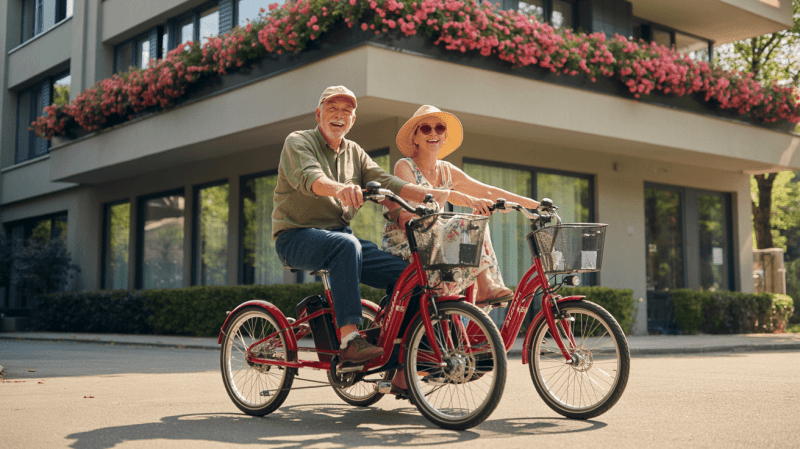
"Pedal and Stretch: Flexibility Exercises for Aging Bikers"
Start by gently rotating your neck from side to side, making sure to keep your movements slow and controlled. Next, raise your shoulders up towards your ears, hold for a few seconds, and then release. This can help release tension in your upper body before a ride. You can also perform some gentle shoulder rolls, bringing your shoulders forward, up, back, and down in a circular motion. This will help loosen up your shoulder joints and prepare them for the workout ahead.
Moving down to your lower body, perform some hip circles to warm up your hip flexors and improve mobility in your hips. Simply stand with your feet hip-width apart and rotate your hips in a circular motion, first clockwise and then counterclockwise. Additionally, perform some gentle knee hugs, bringing one knee up towards your chest and holding it there for a few seconds before switching sides. This can help improve flexibility in your quads and hamstrings.

Lower Body Stretches
As aging cyclists, it's important to prioritize flexibility in our lower body to prevent injuries and improve performance. Try incorporating these simple stretches into your routine to keep your muscles and joints in top condition.
1. Quadriceps Stretch: Stand upright and grab one ankle behind you, bringing your heel towards your glutes. Hold this position for 30 seconds on each leg, feeling the stretch in the front of your thigh.
2. Hamstring Stretch: Sit on the floor with one leg extended straight out in front of you and the other bent. Lean forward from your hips and reach towards your toes, feeling the stretch in the back of your thigh. Hold for 30 seconds and switch legs.
3. Calf Stretch: Stand facing a wall with one foot forward and one foot back. Bend your front knee and straighten your back leg, keeping both heels on the ground. Lean forward into the wall to deepen the stretch in your calf. Hold for 30 seconds on each leg.

Upper Body Mobility
As we age, cyclists need to maintain flexibility in their upper body to prevent injuries and improve overall performance. Here are some simple exercises that can help improve your upper body mobility:
1. Shoulder Rolls: Begin by standing with your feet hip-width apart and your arms by your sides. Slowly roll your shoulders forward in a circular motion, making sure to keep your neck relaxed. Repeat this movement 10 times, then switch to rolling your shoulders backward.
2. Arm Circles: Extend your arms out to the sides at shoulder height. Make small circles with your arms, gradually increasing the size of the circles. After 10 circles, reverse the direction. This exercise helps to improve shoulder mobility and flexibility.
3. Chest Opener: Stand with your arms extended behind your back and clasped together. Slowly lift your arms up towards the ceiling, opening up your chest and stretching your shoulders. Hold this position for 15-30 seconds, then release. This exercise helps to counteract the hunched position that many cyclists develop.
4. Tricep Stretch: Extend one arm overhead, bending your elbow and reaching your hand down towards your back. Use your other hand to gently push on the elbow, feeling a stretch along the back of your arm. Hold for 15-30 seconds, then switch sides.
5. Neck Stretches: Gently tilt your head to one side, bringing your ear towards your shoulder. Hold for a few seconds, then switch to the other side. Next, slowly turn your head to the side, looking over your shoulder. Hold for a few seconds, then turn to the opposite side. These stretches help to relieve tension in the neck and shoulders from cycling.
Balance and Stability Drills
For aging cyclists, maintaining balance and stability becomes increasingly important to prevent falls and injuries. Incorporating specific drills into your flexibility routine can help improve your overall stability on and off the bike.
One effective drill is the single-leg balance exercise. Stand on one leg for 30 seconds, focusing on keeping your core engaged and maintaining your balance. Switch to the other leg and repeat. This exercise helps strengthen the muscles in your legs and improve your overall balance.
Another beneficial drill is the stability ball exercise. Sit on a stability ball with your feet slightly wider than hip-width apart. Lift one foot off the ground and hold for 10-15 seconds before switching to the other foot. This exercise helps engage your core muscles and improve your stability while sitting in the saddle.
Incorporating these balance and stability drills into your flexibility routine can help aging cyclists maintain their overall strength and stability, allowing them to continue enjoying the sport for years to come. So don't forget to add these exercises to your training routine to stay strong and steady on the bike.
Recent Featured Articles:
Family Cycling: Grandparent Tips for Rides
"Building Strength And Endurance Through Senior Cycling"
Rediscovering Freedom: Embrace Senior Cycling in Retirement
DISCLAIMER
This document is provided for general information purposes only and should not be relied upon as providing legal advice, technical, or specific operational guidance to the reader, whether as to the practices described in the document or the applicable legal requirements and regulations. Senior Trikes.Com expressly disclaims any responsibility for liability arising from or related to the use or misuse of any information in this document.